
Published · Updated
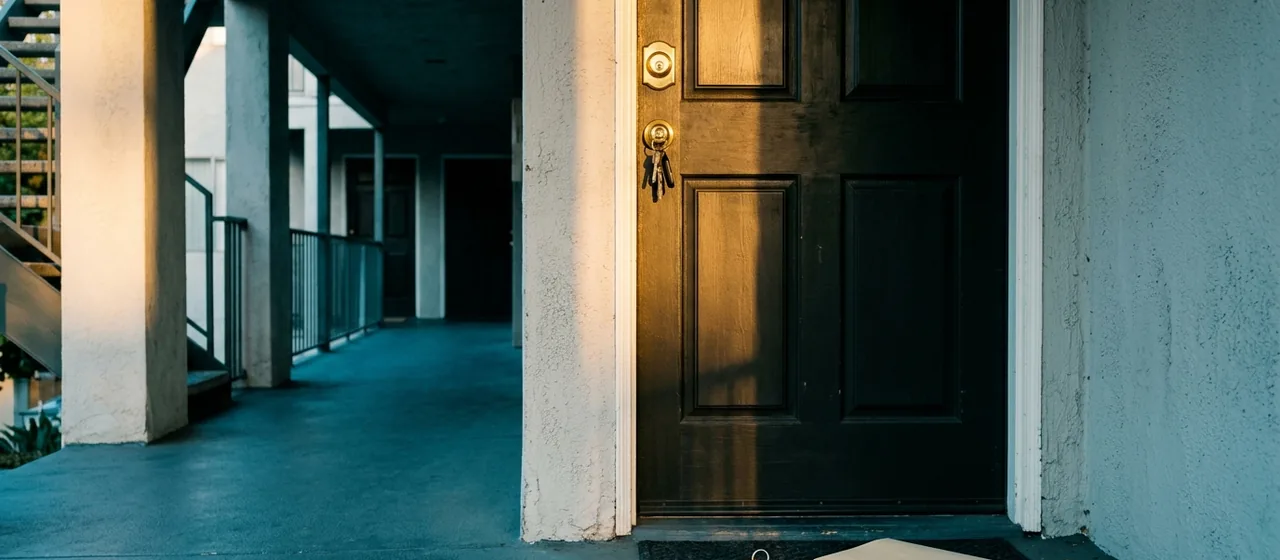
The Baseline: Rentals Must Have Real Locks
California's security statute (Civil Code §1941.3) requires a deadbolt on the main entry door of a rental, operable locking mechanisms on the other exterior doors, and locking or security devices on windows designed to open.
A missing or broken entry deadbolt is below that legal floor, and fixing it is the landlord's job. One condition matters: the duty to repair runs from notice, so give it in writing and keep a dated copy. That email turns "they knew and did nothing" from an argument into a record.
From the trade side: "operable" is doing a lot of work in that sentence. A deadbolt that only latches with a lift-and-shove is on its way to failing the standard, and it's usually an alignment fix, not new hardware. See lock installation & repair.
Between Tenants: The Key-Control Question
Here's the uncomfortable math of turnover: every previous tenant, their roommates, partners, and the contractor who once borrowed a key are all potential keyholders.
Rekeying between tenancies (one visit, all cylinders re-pinned, old keys dead) is the standard professional answer, and at $85–$225 for a visit covering 1–4 locks, it's one of the cheapest forms of liability reduction a landlord can buy. Property managers running multiple turnovers get firm written quotes for the batch.
Tenants moving in: it's a fair question to ask in writing. "Were the locks rekeyed after the last tenancy?" The answer tells you something about the operation either way.
Domestic Violence: The Special Path
California gives tenants protected by the domestic-violence statutes a specific route to lock changes (Civil Code §§1941.5–1941.6): with the qualifying documentation and a written request, a tenant can require the landlord to change the locks within 24 hours.
If the landlord doesn't act in that window, the tenant may change the locks themselves and must give the landlord a key within 24 hours of doing so. What counts as qualifying documentation is specific, so pair the statute with a local DV advocate or legal aid who handles it regularly.
Our role when we get these calls: fast, quiet, licensed work, ownership/authority verified, receipts provided. The paperwork matters here more than anywhere.
The Bright Line: Lockouts Are Not Evictions
However bad a landlord-tenant dispute gets, California draws a hard line (Civil Code §789.3): changing the locks, plugging the keyway, removing doors, or shutting off utilities to force a tenant out is unlawful self-help eviction, with penalties that accrue per day.
Evictions go through court, full stop. This is also a line we hold: a locksmith asked to lock a tenant out of an occupied rental is being asked to participate in something unlawful, and a licensed one will decline. Authorization checks exist for exactly these moments.
Quick Reference
The five situations we get asked about most, each with its short answer.
| Situation | Short answer |
|---|---|
| Broken entry deadbolt | Landlord must repair: habitability baseline |
| Rekey between tenants | Landlord's move; standard practice, cheap insurance |
| Tenant wants locks changed (DV) | Protected statutory path with documentation + timelines |
| Tenant changing locks unilaterally | Check the lease; usually needs consent or a provided key |
| Landlord locks tenant out | Illegal self-help eviction. Document and get legal help |
Locked Out of Your Own Rental
Most rental lock calls aren't disputes at all: a tenant is standing outside their own door at nine at night. Try the building first, since on-site management or an after-hours maintenance line is often the cheaper route.
If nobody answers, a licensed locksmith can open it, and expect to be asked for proof you live there: photo ID plus a lease page, a utility bill, or addressed mail. We ask every time, because a company that opens rental doors without checking is a company that will open yours for someone else. A home lockout is $60–$170 all-inclusive, at a rental like anywhere else, and the lockout playbook covers what to do while you wait.