
Published · Updated
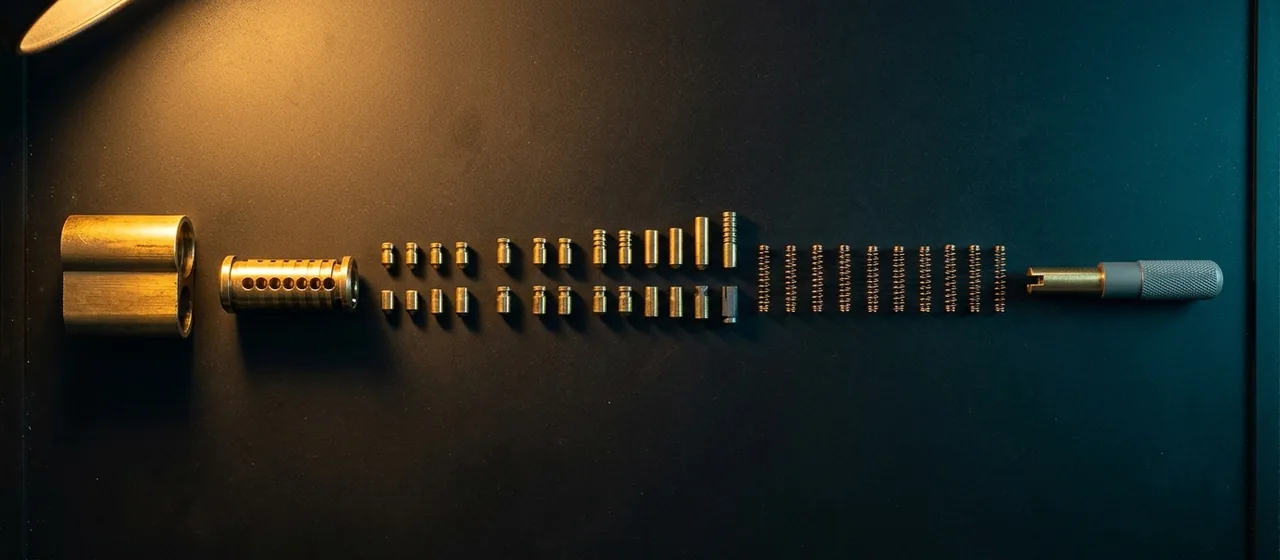
What Rekeying Actually Is
Inside your lock's cylinder is a row of pins of different heights. Your key's cuts match those heights; that's all a key is.
Rekeying means the technician swaps those pins for a new set. After that, a new key operates the lock and every old key becomes scrap metal. Same hardware, same look, same security rating. New keys. It typically takes minutes per lock once the technician is at your door.
Replacement means removing the hardware entirely and installing new locks: necessary sometimes, but a bigger job with a bigger bill, and often sold to people who didn't need it.
The Decision Tree
Match your situation to a line below and the answer is usually obvious.
- You moved in, hardware is fine → rekey. The previous owner's agent, contractor, dog-sitter, and ex all potentially hold keys. Rekeying resets that to zero. (Full checklist: the day-one move-in guide.)
- A key is lost or was never returned → rekey. Whether it fell out of a pocket or left with a roommate, the fix is identical and immediate.
- Locks stick, wobble, or look tired → replace. Rekeying a worn-out lock is putting new strings on a broken guitar. If the mechanism is failing, honest advice is replacement. See lock installation.
- You want a security upgrade → replace (selectively). Rekeying keeps your security level; it can't raise it. If the goal is pick/bump/drill resistance and controlled key copying, that's a high-security cylinder upgrade, usually worth doing on the main entry first, not every door.
- After a break-in → depends on what broke. Damaged hardware gets replaced; untouched doors usually just need rekeying if key control is in question. The full playbook: after a break-in.
The Money, Side by Side
These are the published totals for each option, so the comparison is concrete.
| Option | Published total | What you get |
|---|---|---|
| Rekeying visit | $85 – $225 | One visit, 1–4 locks re-pinned, new keys cut on site, keyed alike on request |
| Lock installation | $60 – $180 per lock | New hardware (ours or yours) fitted and aligned, as part of a service visit |
| Deadbolt installation | $80 – $200 | Including fresh door prep where the door never had one |
| High-security upgrade | $120 – $310 | Pick/bump-resistant cylinder with controlled key duplication |
All-inclusive published ranges: service call, labor, evening timing, fees, and taxes included; exact total confirmed before work begins.
The Upsell to Watch For
One sentence sells more unnecessary hardware than any other in this trade.
One Visit, Whole House
The most satisfying version of this job: one visit, every exterior lock re-pinned, and one new key that runs all of them. Where a door carries an odd brand that will not join the set, keying it alike means a matching cylinder, quoted from the published ranges before anyone fits it. The rekeying page has the rest.